How to Select Automation system for Industrial Applications
Industrial automation has become an important part of modern manufacturing, processing, packaging, and material handling. Businesses use automation equipment to control machinery, monitor production activities, improve process consistency, and manage repetitive operations. Selecting the right equipment is an important decision because each industrial application has different technical, operational, and safety requirements.
Industrial automation equipment includes programmable logic controllers (PLCs), sensors, motors, variable frequency drives (VFDs), human-machine interface (HMI) panels, robotic systems, and industrial control systems. Understanding how these components work and how they fit into an existing facility helps businesses make informed equipment decisions.
What Is Industrial Automation Equipment?
Industrial automation equipment refers to machines, electronic devices, control components, and software used to operate industrial processes with reduced manual intervention.
These systems can control individual machines or coordinate multiple production activities. For example, a packaging facility may use sensors to detect products, PLC controllers to manage machine sequences, and motors or drives to control conveyor movement.
Common industrial automation products include:
Programmable logic controllers (PLCs)
Industrial sensors and actuators
Variable frequency drives
Servo motors and servo drives
Human-machine interface panels
Industrial robots
Machine vision systems
Industrial communication equipment
Control panels and safety devices
The combination depends on the production process, required control functions, and operating environment.
Why Selecting the Right Automation Equipment Matters
Choosing suitable factory automation equipment affects production reliability, maintenance planning, product quality, and operational safety.
Equipment that does not match the application may create communication problems, inconsistent performance, unnecessary energy consumption, or difficulties during maintenance.
A properly planned automation system can support:
More consistent production processes
Accurate machine monitoring
Better control over operating sequences
Reduced repetitive manual activities
Improved process visibility
Easier identification of equipment faults
Integration between different production systems
The objective should be to select equipment that meets the actual process requirements rather than choosing products only because they have advanced features.
1. Understand the Industrial Application
The first step is identifying the specific process that needs automation. Different applications require different equipment configurations.
For example, a conveyor system may need motors, VFDs, sensors, and PLC controllers. A robotic assembly line may require industrial robots, servo drives, safety devices, and machine vision systems.
Consider these application areas:
Manufacturing: Production machinery may require PLC-based control systems, sensors, motors, and automated assembly equipment.
Packaging: Packaging automation equipment may include filling machines, labeling systems, inspection sensors, and conveyor controls.
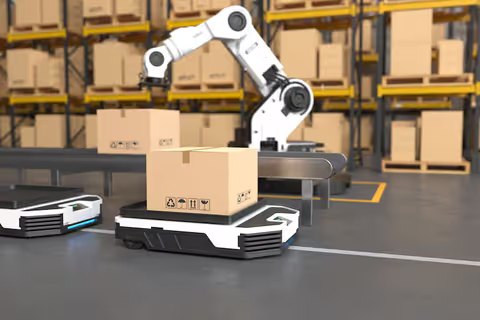
Material handling: Conveyors, robotic palletizers, automated guided vehicles, and warehouse automation systems support internal product movement.
Process industries: Chemical, pharmaceutical, and food processing facilities may require process controllers, temperature sensors, flow meters, and SCADA systems.
Defining the application first helps narrow the equipment options.
2. Check Technical Specifications and Performance
Technical specifications determine whether automation equipment can perform the required task.
Before selecting a product, review its operating characteristics and compatibility with the intended machinery.
Important specifications include:
Voltage and current requirements
Motor speed and torque
Load capacity
Input and output signal types
Operating temperature range
Response time
Accuracy and repeatability
Communication protocols
Protection and environmental ratings
For example, a variable frequency drive must be suitable for the motor's electrical ratings and the application's speed-control requirements. A PLC must have sufficient input/output capacity and support the necessary communication interfaces.
Comparing technical datasheets helps prevent selection errors.
3. Select the Appropriate PLC and Control System
A programmable logic controller is a central component in many industrial automation systems. It receives information from sensors and other devices, processes programmed instructions, and controls connected equipment.
When evaluating PLC controllers, consider:
Number of digital and analog inputs and outputs
Processing capacity
Memory and program requirements
Communication support
Expansion options
Programming environment
Compatibility with existing equipment
For larger or more complex operations, a distributed control system (DCS) or supervisory control and data acquisition (SCADA) platform may also be appropriate.
The right control system depends on the number of machines, process complexity, monitoring requirements, and future expansion plans.
4. Evaluate Sensors, Motors, and Drives
Sensors, motors, and drives are essential parts of industrial automation equipment.
Industrial Sensors
Industrial sensors detect changes in the environment or production process. They can measure position, distance, temperature, pressure, flow, and other variables.
Common types include:
Proximity sensors
Photoelectric sensors
Temperature sensors
Pressure sensors
Flow sensors
Level sensors
The correct sensor depends on the material being detected, measurement range, accuracy, response time, and environmental conditions.
Motors and Variable Frequency Drives
Industrial motors provide mechanical movement for pumps, fans, conveyors, mixers, and other machinery.
Variable frequency drives control motor speed by adjusting the frequency and voltage supplied to suitable AC motors. They are commonly used where variable-speed operation is required.
Servo motors and drives are used in applications that require controlled positioning, speed, and motion.
5. Consider Safety and Environmental Conditions
Industrial equipment operates in different environments, including high-temperature areas, dusty facilities, wet processing zones, and locations exposed to vibration or chemicals.
Equipment should be selected according to the conditions in which it will operate.
Review:
Ingress protection ratings
Temperature limits
Electrical insulation requirements
Vibration resistance
Dust and moisture exposure
Emergency-stop arrangements
Machine guarding and interlocks
Applicable electrical and machinery safety standards
Safety functions should be assessed as part of the complete machine or system. Selecting a component with a safety-related feature does not automatically make the entire installation safe.
A qualified engineering team should evaluate installation requirements and applicable regulations.
6. Check Compatibility With Existing Equipment
Many industrial facilities operate machinery from different manufacturers and generations. New automation products must work with the existing electrical, mechanical, and software infrastructure.
Check communication protocols such as Modbus, PROFINET, EtherNet/IP, and EtherCAT where relevant. Also review wiring, connectors, software versions, mounting dimensions, and supported operating functions.
Compatibility is particularly important when upgrading older PLC controllers, replacing drives, or connecting new sensors to an existing control panel.
A documented technical comparison can help identify integration issues before installation.
7. Compare Maintenance, Reliability, and Total Ownership Requirements
The initial purchase price is only one part of an equipment decision. Maintenance, installation, training, spare parts, energy use, and future upgrades also affect long-term operating requirements.
When comparing industrial automation suppliers and manufacturers, review:
Product documentation and technical datasheets
Warranty terms and support arrangements
Spare-part availability
Maintenance requirements
Software updates and compatibility
Training and commissioning support
Expected equipment lifecycle
Total cost of ownership provides a broader basis for comparing alternatives than the initial equipment price alone.
8. Review Supplier Experience and Technical Support
Industrial automation suppliers may provide individual components, complete control systems, or integrated equipment solutions.
Before selecting a manufacturer or supplier, examine its product specifications, industry experience, technical documentation, and support capabilities.
Useful evaluation questions include:
Does the equipment meet the required technical specifications?
Is documentation available for installation and maintenance?
Can the supplier explain integration requirements?
Are replacement components available?
Is technical support accessible?
Can the equipment support planned future expansion?
For complex applications, involving a qualified system integrator can help coordinate equipment selection, programming, installation, and commissioning.
Future Trends in Industrial Automation
Industrial automation continues to develop through connected devices, artificial intelligence, robotics, and industrial data systems.
Important developments include:
Industrial Internet of Things (IIoT): Connected sensors and machines provide operational data that can support monitoring and maintenance planning.
Artificial intelligence: AI-based tools are being used for selected inspection, process analysis, and predictive maintenance applications.
Collaborative robots: These robots are designed for specific tasks in workspaces shared with people, subject to suitable risk assessment and safety measures.
Machine vision: Camera-based systems can support product inspection, identification, measurement, and quality control.
Smart manufacturing: Integration between PLCs, SCADA, MES, ERP, and industrial networks helps connect production operations with business systems.
These technologies may provide new capabilities, but their suitability depends on the application, infrastructure, and technical requirements.
Frequently Asked Questions
1. What is the most common industrial automation equipment?
Common equipment includes PLC controllers, industrial sensors, motors, VFDs, HMI panels, actuators, robots, and industrial control systems.
2. How do I choose the right automation equipment?
Start by defining the application, then compare technical specifications, compatibility, safety requirements, operating conditions, maintenance needs, and supplier support.
3. What is the role of a PLC in industrial automation?
A PLC receives signals from connected devices, processes programmed instructions, and controls machinery or industrial processes.
4. What is the difference between a PLC and SCADA system?
A PLC performs machine or process control. SCADA is generally used for supervisory monitoring, data collection, alarms, and operator interaction across equipment or facilities.
5. Why are industrial sensors important?
Sensors provide information about physical conditions such as temperature, pressure, position, distance, and flow, allowing control systems to respond to process conditions.
6. What should businesses check when selecting automation suppliers?
They should review product specifications, compatibility, documentation, technical support, spare-part availability, warranty conditions, and relevant industry experience.
Conclusion
Selecting automation equipment for industrial applications requires a clear understanding of production needs, technical specifications, operating conditions, and long-term maintenance requirements. PLC controllers, sensors, motors, drives, robotics, and industrial control systems each perform different functions within an automated facility.
Businesses should compare equipment based on application suitability, system compatibility, safety, reliability, and supplier support. A structured selection process helps create automation systems that meet current operational needs while allowing room for future improvements in manufacturing and industrial processes.