Heavy Equipment Parts Lookup: A Complete Guide to Finding the Right Machine Part
Heavy equipment parts lookup is the process of identifying a component by using information such as the equipment manufacturer, model number, serial number, part number, production series, or component specifications. It is commonly used when identifying parts for excavators, wheel loaders, bulldozers, backhoe loaders, skid steer loaders, compact equipment, and other construction or industrial machinery.
Modern parts lookup systems can organize equipment information by manufacturer and model, while some systems also allow searches using serial numbers or existing part numbers. For example, manufacturer-supported parts platforms can use machine model and serial information to narrow down the applicable components.
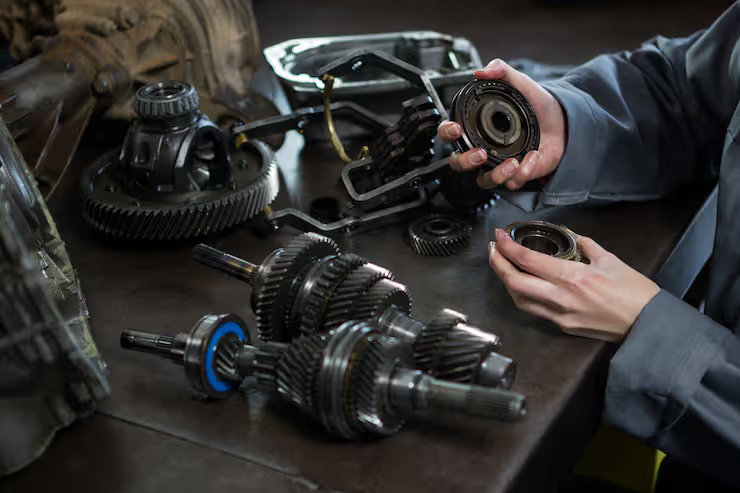
Why Accurate Parts Identification Matters
Identifying the correct heavy equipment part is important because similar machines can sometimes use different components. Changes in production year, machine configuration, engine specification, attachment type, or serial-number range can affect component compatibility.
A general description such as “hydraulic pump for an excavator” may not provide enough information to identify the exact component. A more detailed search using the machine make, model, serial number, and existing part number can narrow the identification process and reduce the possibility of selecting an incompatible component.
Accurate identification is also useful for equipment maintenance planning. Knowing the correct component helps maintenance teams document machine repairs, maintain equipment records, and understand which components belong to a particular machine configuration.
Information Needed for Heavy Equipment Parts Lookup
Equipment Make and Model
The manufacturer and exact machine model are usually the starting points for a parts lookup. An excavator, loader, or dozer may have several versions within the same product family, so the complete model designation is useful when narrowing the search.
For example, instead of searching only for “excavator hydraulic parts,” a lookup can begin with the manufacturer and exact excavator model. This provides a more specific starting point for identifying hydraulic, engine, electrical, undercarriage, or structural components.
Serial Number or PIN
The machine serial number, product identification number, or PIN can provide another important layer of identification. The same model can have component differences between production ranges, making serial information particularly useful.
Some manufacturer parts systems specifically support searches using serial numbers, models, or product families.
Existing Part Number
If the old component has a readable part number, it can be one of the most useful pieces of information for a parts lookup. Part numbers can help identify the original component and may also reveal whether a manufacturer has introduced a replacement or superseding number.
The original number should therefore be recorded before replacing a component whenever practical.
Equipment Identification Plate
The equipment identification plate or nameplate can provide important information such as the manufacturer, model, serial number, production information, and configuration details. If the information is difficult to read, a clear photograph can help with manual identification.
Component Photographs
Photographs can provide additional information when the part number is unavailable. Images showing the complete component, mounting points, connectors, dimensions, labels, and surrounding assembly can make identification more precise.
How to Perform a Heavy Equipment Parts Lookup
Start With the Machine Information
Begin by recording the equipment manufacturer, machine type, model, serial number, production year if available, and engine information when relevant. Keeping these details together creates a useful identification record.
Search the Part Number
If the existing component has a visible part number, search that number through an appropriate parts catalog or manufacturer-supported parts database. Part numbers are generally more specific than broad descriptions such as “loader filter” or “excavator seal.”
Check the Machine Model
When a part number is unavailable, use the exact machine model as the next identification point. Equipment parts catalogs can organize components according to categories such as engine, hydraulics, electrical systems, undercarriage, attachments, and body components.
Verify the Serial Range
A model match alone may not always be sufficient. Serial-number ranges can help determine whether a component belongs to a particular production version. This is especially relevant when manufacturers have made design changes during a model's production period.
Compare Technical Specifications
After locating a potential component, compare its specifications with the existing part. Depending on the component, relevant information can include dimensions, mounting arrangement, connector configuration, operating specifications, thread type, capacity, or other technical characteristics.
Confirm Compatibility
The final step is to confirm that the identified part corresponds to the specific machine configuration. When manufacturer documentation or an authorized technical source is available, it can provide additional confirmation.
Common Heavy Equipment Parts Categories
Engine Components
Engine-related components can include filters, belts, pumps, gaskets, cooling components, sensors, and other parts associated with the power unit. Engine make, model, and serial information can be particularly useful for identifying the correct component.
Hydraulic Components
Hydraulic systems contain numerous components, including hydraulic pumps, motors, cylinders, valves, hoses, seals, and filtration components. Because similar-looking hydraulic components can have different specifications, model and part-number verification is important.
Undercarriage Components
Tracked equipment may contain track chains, rollers, idlers, sprockets, track shoes, and related components. Identifying the machine model and undercarriage configuration can help narrow the lookup.
Electrical Components
Electrical parts may include alternators, starters, sensors, switches, relays, wiring components, and control-system components. Connector type, voltage specifications, and part numbers can be useful when identifying these items.
Attachments and Wear Parts
Buckets, cutting edges, teeth, adapters, couplers, and other attachments can vary according to machine size and configuration. Measurements and attachment specifications may therefore be needed in addition to the machine model.
Heavy Equipment Parts Lookup by Machine Type
Heavy equipment parts lookup can be organized by machine category. Excavator parts commonly include hydraulic components, undercarriage parts, filters, engine components, and attachment-related items. Wheel loader parts can include drivetrain, hydraulic, braking, electrical, bucket, and engine components.
Bulldozer parts may involve track systems, hydraulic components, blade-related parts, powertrain components, and filters. Backhoe loader parts can cover both loader and excavator-style systems, making exact model identification particularly important.
Other categories include skid steer parts, compact track loader parts, crane components, forklift parts, mining equipment parts, and agricultural machinery components.
OEM and Aftermarket Parts Identification
A parts lookup may identify an original equipment manufacturer component, an aftermarket equivalent, or a compatible replacement depending on the catalog being used. These categories should not automatically be treated as identical.
OEM identification refers to components associated with the original equipment manufacturer, while aftermarket components are produced by other manufacturers. When comparing components, users should examine technical specifications, compatibility information, applicable documentation, and equipment requirements rather than relying only on a general description.
Common Mistakes in Equipment Parts Lookup
One common mistake is searching only by machine type. A search such as “CAT excavator parts” or “loader hydraulic pump” may return many possible components because equipment manufacturers produce multiple models and configurations.
Another mistake is ignoring the serial number. Two machines with the same model designation may have component differences resulting from production changes or configuration variations.
Using an incomplete part number is another potential problem. Numbers should be recorded carefully, including letters, numbers, suffixes, and prefixes. A photograph of the identification plate or component can provide useful additional information.
Finally, users should avoid assuming that physical appearance alone proves compatibility. Technical specifications and machine configuration should be checked before identifying a component as an exact match.
Heavy Equipment Parts Lookup Tools and Resources
Digital parts catalogs have made equipment parts identification more structured. Some platforms allow users to search by model, serial number, part number, or product family. Illustrated parts diagrams can also help users understand where a component is located within an assembly.
Manufacturer parts portals can be particularly useful because they organize components according to specific equipment models and configurations. Some systems also provide exploded diagrams that make it easier to connect a component with its location in the machine.
For difficult identification cases, equipment documentation, maintenance manuals, identification plates, component photographs, and technical specifications can be combined rather than relying on one source alone.
Tips for Better Heavy Equipment Parts Identification
Keep a permanent record of the machine's make, model, serial number, engine information, and important component numbers. This information can make future maintenance research more efficient.
Photograph identification plates before they become difficult to read because of wear, dirt, or environmental exposure. It is also useful to photograph unusual components before removal so their installation position and connections are documented.
When researching a replacement component, compare the machine information with the part number and technical specifications. If the available information conflicts, the discrepancy should be investigated rather than assuming that the first matching description is correct.
Conclusion
Heavy equipment parts lookup is an important part of equipment maintenance and component identification. A reliable lookup process generally begins with the machine make and model and then adds more precise information such as the serial number, part number, production details, photographs, and technical specifications.
Using several identification points can help distinguish between similar components and different equipment configurations. Manufacturer parts catalogs, illustrated diagrams, equipment documentation, and accurate machine records can all contribute to a more reliable identification process.