Stäubli Explained: Robotics, Connectors & Industrial Technology
Stäubli is an international industrial and mechatronic technology group known for solutions covering industrial robotics, electrical connectors, fluid connectors, automation, and textile machinery. The company traces its history to 1892, when it began as a small workshop in Horgen, Switzerland. Today, Stäubli operates internationally across multiple industrial markets.
For people researching industrial automation, robotic systems, manufacturing technology, electrical connectors, hydraulic connections, and textile machinery, Stäubli provides an interesting example of how mechanical engineering, electronics, and automation technologies can be combined in industrial environments.
What Is Stäubli?
Stäubli is a global industrial technology company whose activities are organized around four main divisions:
- Electrical Connectors
- Fluid Connectors
- Robotics
- Textile
Its technologies are used across industries such as automotive, aerospace, renewable energy, electronics, food, medical applications, railway, plastics, energy, and other manufacturing environments.
The company states that it operates in 28 countries, with agents in 50 countries across four continents and a global workforce of approximately 6,000 people. Its headquarters are located in Pfäffikon, Switzerland.
Why Stäubli Technology Matters in Modern Manufacturing
Modern manufacturing increasingly depends on automation, precision engineering, industrial robotics, reliable connections, and process efficiency.
Manufacturing plants may need to move materials automatically, connect electrical or fluid circuits, change tools quickly, control production equipment, or maintain consistent textile production.
These requirements have increased interest in technologies such as:
- Industrial automation
- Robotic arms
- Collaborative robotics
- Smart manufacturing
- Industry 4.0
- Industrial connectors
- Quick-release couplings
- Automated production systems
- Precision manufacturing
- Factory automation
Stäubli's four divisions address different parts of these industrial requirements.
Stäubli Robotics
Industrial Robots
Stäubli Robotics develops robotic systems for industrial applications, including SCARA robots, six-axis robots, FAST picker systems, collaborative robots, and related software. Its robotics portfolio is designed for applications where speed, precision, repeatability, and controlled movement are important.
Industrial robotic systems can be used for tasks such as:
- Assembly
- Material handling
- Packaging
- Machine tending
- Picking and placing
- Manufacturing operations
- Inspection-related processes
- Laboratory automation
- Electronics production
The specific robot configuration depends on payload, reach, cycle time, workspace, environmental conditions, and the required level of precision.
SCARA Robots
SCARA robots are commonly used for high-speed manufacturing operations involving horizontal movement and vertical positioning.
Typical applications can include:
- Component assembly
- Pick-and-place operations
- Packaging
- Electronics manufacturing
- Small-part handling
- Automated production lines
The compact design of SCARA systems can make them appropriate for production environments where floor space is limited.
Six-Axis Robots
Six-axis robotic arms provide greater movement flexibility than simpler four-axis systems.
They can perform complex positioning and orientation tasks and may be used in:
- Automotive manufacturing
- Aerospace production
- Industrial assembly
- Machine tending
- Food processing
- Pharmaceutical manufacturing
- Electronics production
The selection of a six-axis robot depends on factors such as payload, reach, repeatability, cycle time, tooling, and environmental requirements.
Collaborative Robotics
Collaborative robots, often called cobots, are designed for applications where robots and people may work within the same production environment under appropriately engineered safety conditions.
Stäubli includes collaborative robotics within its robotics portfolio. However, the suitability of a collaborative robot depends on the complete application, risk assessment, guarding requirements, tooling, and applicable safety standards.
Stäubli Electrical Connectors
Electrical connectors are important components in industrial equipment because they establish electrical connections between different systems and components.
Stäubli Electrical Connectors develops connection technologies for applications where factors such as electrical performance, mechanical reliability, environmental resistance, and safety are important.
Applications of Electrical Connectors
Electrical connector technology can be relevant to industries including:
- Renewable energy
- Automotive
- Rail transportation
- Industrial equipment
- Power systems
- Energy infrastructure
- Manufacturing
- Electronics
Connector selection depends on electrical ratings, current requirements, environmental exposure, mechanical conditions, installation method, and applicable technical standards.
Renewable Energy Connections
Electrical connectors are particularly important in renewable energy systems because electrical power must be transferred reliably between components.
Stäubli has a significant presence in photovoltaic connector technology. Its India operations include local manufacturing of renewable energy connectors at its Bangalore production facility.
Stäubli Fluid Connectors
Fluid connectors are used to transfer liquids or gases between different parts of industrial systems.
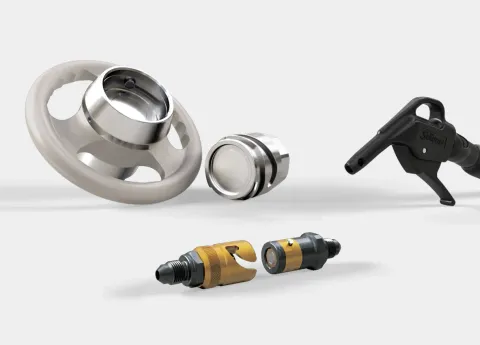
Stäubli Fluid Connectors covers connection requirements for fluids, gases, and electrical power and provides technologies including quick-release couplings, dry-disconnect couplings, multi-coupling systems, safety breakaway couplings, tool changers, and quick mold change systems.
Quick Couplings
Quick couplings allow two fluid lines to be connected or disconnected without requiring lengthy connection procedures.
Depending on the design, quick couplings may be used with:
- Hydraulic systems
- Pneumatic systems
- Cooling circuits
- Gas systems
- Industrial machinery
- Temperature-control equipment
- Manufacturing equipment
When selecting a quick coupling, engineers typically consider pressure, flow rate, fluid compatibility, temperature, sealing, locking mechanism, materials, and environmental conditions.
Dry-Disconnect Couplings
Dry-disconnect technology is designed to reduce fluid leakage or spillage during connection and disconnection.
This type of technology can be relevant in applications where contamination control, environmental protection, fluid handling, and operator safety are important.
Stäubli describes quick and dry disconnect coupling applications across sectors including automotive, motorsports, chemical processing, and fluid filling and draining operations.
Quick Mold Change Technology
Manufacturing equipment may require molds to be changed when production requirements change.
Quick mold change systems are designed to simplify and standardize this type of operation. They can be particularly relevant to injection molding and plastics manufacturing, where production equipment may need different molds for different products.
Temperature-control connections are another important part of mold systems. For example, Stäubli's RPL quick couplings are designed for temperature-control circuits, particularly mold cooling lines on injection presses.
Stäubli Tool Changers
Robot tool changers allow an industrial robot to change end-of-arm tooling.
A single robot may need different tools for different manufacturing operations. Automated tool changing can therefore increase process flexibility.
Stäubli describes robotic tool-changing systems capable of transmitting different utilities, including:
- Pneumatics
- Vacuum
- Electrical power
- Signals
- Other media
These systems can be integrated into automated manufacturing environments where robots need to perform multiple operations.
Stäubli Textile Technology
Stäubli has a long history in the textile industry. Its textile activities cover different parts of the weaving process, including weaving preparation, frame weaving, Jacquard weaving, carpet production, and technical textiles.
Jacquard Technology
Jacquard weaving systems control individual warp threads or groups of threads to create complex patterns.
Stäubli also produces harness systems used between Jacquard machines and weaving machines. Its harness solutions are designed for different weaving speeds and fabric applications, including technical fabrics and conventional textile products.
Textile Automation
Automation in textile manufacturing can help control repetitive production processes and improve consistency.
Depending on the production line, textile automation may involve:
- Weaving preparation
- Warp management
- Jacquard control
- Frame weaving
- Carpet weaving
- Technical textile production
- Machine monitoring
Stäubli and Industry 4.0
Industry 4.0 describes the development of connected, data-driven, and increasingly automated manufacturing environments.
Industrial robots, sensors, software, automated tooling, machine communication, and digital production systems are important elements of Industry 4.0.
Stäubli's robotics portfolio includes connected robotics technologies designed for smart manufacturing environments. Its robotics information also highlights applications involving cleanrooms, harsh environments, machining, food, pharmaceutical, and electronics industries.
Smart Manufacturing
Smart manufacturing generally involves connecting production equipment with information and control systems.
A modern automated production cell may combine:
- Industrial robots
- Robot controllers
- Sensors
- Vision systems
- Tool changers
- Electrical connectors
- Pneumatic connections
- Manufacturing software
- Safety systems
- Production data
The objective is to coordinate these components so that manufacturing processes can operate reliably and efficiently.
Industries Using Stäubli Technologies
Stäubli technologies are relevant to a wide range of industrial sectors.
Automotive Manufacturing
Automotive production requires high levels of automation and repeatability.
Robotics, electrical connections, fluid connections, and automated tooling can be used across different stages of automotive manufacturing.
Aerospace Manufacturing
Aerospace manufacturing involves strict requirements for precision, quality control, and process consistency.
Industrial robotics and specialized connection technologies can support manufacturing and assembly applications.
Electronics Manufacturing
Electronics production often involves small components, controlled environments, precise handling, and repeatable processes.
High-precision robotics can be used for automated handling and assembly applications.
Renewable Energy
Renewable energy infrastructure requires reliable electrical connections and manufacturing systems.
Stäubli's electrical connector activities include technologies used in photovoltaic applications, while its India operations include local production of renewable energy connectors.
Railway Industry
Railway equipment operates under demanding mechanical and environmental conditions.
Stäubli provides electrical connectors, fluid connection technologies, mobile robotics, and textile-related technologies for railway applications.
Pharmaceutical and Food Manufacturing
Production environments involving food and pharmaceutical products can require specialized hygiene, cleaning, material, and environmental considerations.
Stäubli notes that some of its robotic systems are designed for applications ranging from cleanrooms to harsh industrial environments and are used in sectors including food, pharmaceutical, and electronics manufacturing.
How to Evaluate Industrial Automation Technology
Organizations evaluating industrial automation equipment generally need to consider the complete production process rather than focusing on one component.
Production Requirements
Important questions include:
- What task needs to be automated?
- What production volume is required?
- What cycle time is necessary?
- What level of precision is required?
- What payload must the equipment handle?
- What workspace is available?
Environmental Conditions
Environmental conditions can significantly affect equipment selection.
Factors may include:
- Temperature
- Humidity
- Dust
- Chemicals
- Cleanroom requirements
- Washdown requirements
- Vibration
- Corrosive environments
Safety Requirements
Industrial automation should be evaluated alongside applicable machinery and workplace safety requirements.
A complete automation system may require risk assessment, protective equipment, safety controls, appropriate guarding, and validated operating procedures.
Integration Requirements
Industrial equipment rarely operates independently.
Before selecting equipment, engineers may need to evaluate compatibility with:
- PLC systems
- Manufacturing execution systems
- Sensors
- Industrial networks
- Vision systems
- Existing machinery
- Robot controllers
- Tooling
- Safety systems
Stäubli in India
Stäubli has operated in India since 1993 and has expanded its activities from textile machinery to electrical and fluid connectors and robotics.
The company identifies Bangalore and Mumbai as locations in India. Its Bangalore operation includes an office, warehouse, and production facility for renewable energy connectors.
India's growing manufacturing, renewable energy, automotive, electronics, and industrial automation sectors make technologies such as robotics and advanced connection systems increasingly relevant to industrial development.
Key Benefits of Industrial Automation
Industrial automation can provide several potential operational advantages when correctly designed and implemented.
Improved Process Consistency
Automated systems can repeat defined movements and processes with a high degree of consistency.
Production Efficiency
Robotics and automated equipment can perform repetitive operations continuously within their specified operating conditions.
Workplace Ergonomics
Automation can reduce the need for workers to repeatedly perform physically demanding or repetitive movements.
Flexible Production
Robotic systems with interchangeable tools and programmable control can support multiple manufacturing operations.
Process Data
Connected industrial equipment can generate operational information that can support production monitoring and analysis.
Frequently Asked Questions About Stäubli
What is Stäubli known for?
Stäubli is known for industrial technologies covering robotics, electrical connectors, fluid connectors, and textile machinery.
Is Stäubli a robotics company?
Robotics is one of Stäubli's four main divisions. Its robotics portfolio includes SCARA robots, six-axis robots, FAST picker systems, collaborative robots, and software.
What are Stäubli connectors used for?
Stäubli connectors are used for electrical, fluid, gas, hydraulic, pneumatic, thermal, and other industrial connection requirements depending on the specific product and application.
What industries use Stäubli technology?
Stäubli technologies are used across industries including automotive, aerospace, renewable energy, electronics, railway, food, pharmaceutical, plastics, energy, and textile manufacturing.
When was Stäubli founded?
Stäubli traces its origins to 1892, when it began as a small workshop in Horgen, Switzerland.
Conclusion
Stäubli represents a broad industrial technology group combining robotics, automation, electrical connection technology, fluid connection technology, and textile machinery.
Its technologies are relevant to major areas of modern manufacturing, including industrial automation, smart factories, renewable energy, automotive production, aerospace, electronics, railway systems, food processing, pharmaceutical manufacturing, and textile production.
Understanding Stäubli is therefore useful for readers researching industrial robotics, factory automation, Industry 4.0, electrical connectors, hydraulic and pneumatic connections, manufacturing technology, and textile automation. The most appropriate technology for any application depends on technical requirements, environmental conditions, safety considerations, integration requirements, and applicable industry standards.
note: The article is structured as informational content and avoids making unsupported claims or presenting financial/medical/legal advice. Product names and capabilities are described based on Stäubli 's published information.