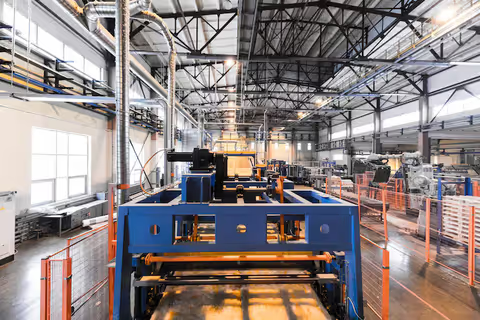
Exploring China's Industrial Machinery and Equipment
China's machinery industry is one of the major parts of its manufacturing economy. It includes the production of industrial equipment, construction machinery, agricultural machines, electrical equipment, automation systems, and precision engineering tools. These machines support industries such as automotive manufacturing, electronics, infrastructure, energy, agriculture, and transportation.
The development of machinery manufacturing in China is closely connected to the country's industrial growth. As manufacturing activities expanded, the need for equipment capable of handling large-scale production also increased. This encouraged the development of factories, engineering facilities, component manufacturers, and technology research centers.
Today, China machinery manufacturing covers several categories, ranging from basic mechanical equipment to advanced computer-controlled systems. Manufacturers use technologies such as computer numerical control (CNC), robotics, artificial intelligence (AI), industrial sensors, and digital monitoring to improve production processes.
What Does China Machinery Manufacturing Include?
China's machinery sector includes different types of equipment designed for specific industrial requirements.
Industrial machinery: Equipment used in factories for processing, assembling, cutting, shaping, and packaging materials.
Construction machinery: Excavators, cranes, bulldozers, loaders, and road construction equipment.
Agricultural machinery: Tractors, harvesters, irrigation equipment, and crop-processing machines.
Electrical machinery: Generators, motors, transformers, and power distribution equipment.
Packaging machinery: Automated systems used for filling, sealing, labeling, and packaging products.
Precision machinery: CNC machines, measurement instruments, and advanced engineering equipment.
Each category contributes to production efficiency and supports different stages of industrial development.
Why China Is an Important Machinery Manufacturing Hub
China has developed a broad industrial ecosystem that connects raw material processing, mechanical engineering, electronic components, equipment assembly, and international trade. This ecosystem allows machinery manufacturers to work across multiple stages of production.
Several factors contribute to the importance of the Chinese machinery industry:
Large manufacturing infrastructure: Industrial clusters support the production of machinery components and complete equipment.
Engineering development: Research and development activities support improvements in machine design, materials, and manufacturing processes.
Industrial automation: Robotics and automated production systems help factories manage repetitive and precision-based operations.
International trade: Machinery and equipment manufactured in China are supplied to different international markets.
Supply chain connectivity: Component manufacturers, logistics networks, and industrial facilities support connected production activities.
Major Types of Machinery Manufactured in China
The Chinese machinery manufacturing industry covers a wide range of equipment. Understanding these categories helps explain how machines support different economic activities.
Machinery category | Common equipment | Main applications |
|---|---|---|
Industrial machinery | CNC machines, lathes, milling machines | Factory production |
Construction machinery | Excavators, cranes, loaders | Infrastructure and construction |
Agricultural machinery | Tractors, harvesters, seeders | Farming and agriculture |
Packaging machinery | Filling and sealing machines | Food and consumer goods |
Mining machinery | Drilling equipment, crushers | Mining and mineral processing |
Electrical machinery | Motors, generators, transformers | Energy and industrial operations |
Textile machinery | Spinning and weaving machines | Textile manufacturing |
Food processing machinery | Mixers, grinders, processing lines | Food production |
Industrial machinery is used to manufacture components and finished products. CNC machines, hydraulic presses, industrial cutting equipment, and automated assembly systems are common examples.
Construction machinery supports infrastructure development through earthmoving, lifting, excavation, and material transportation. These machines are used in roads, bridges, commercial buildings, and industrial construction.
Agricultural machinery supports modern farming activities. Tractors, planting equipment, irrigation systems, and harvesting machines help manage agricultural operations.
Packaging and processing machinery is used in food production, pharmaceuticals, cosmetics, and consumer goods manufacturing. These systems can automate filling, mixing, labeling, sorting, and packaging activities.
Importance of Machinery in Modern Industries
Machinery plays an important role in improving industrial productivity and supporting large-scale manufacturing. Different industries depend on specialized equipment to maintain consistent production processes.
Automotive manufacturing
Automotive factories use robotic arms, welding equipment, CNC machines, painting systems, and automated inspection technology. These machines support vehicle assembly and component manufacturing.
Electronics manufacturing
Electronics production requires precision equipment for circuit board assembly, semiconductor processing, component placement, and product testing. Automated machines help maintain accuracy during complex manufacturing operations.
Agriculture and food production
Agricultural equipment supports planting, irrigation, harvesting, and crop processing. Food processing machinery helps manufacturers manage preparation, preservation, and packaging activities.
Energy and infrastructure
Electrical machinery, generators, pumps, compressors, and heavy construction equipment support power generation and infrastructure development.
Mining and material processing
Mining operations use drilling machines, crushers, conveyors, and material-handling systems to extract and process natural resources.
How Advanced Machinery Technology Works
Modern China industrial equipment increasingly combines mechanical systems with digital technology. These developments are changing how factories monitor equipment and organize production.
Important technologies include:
Computer Numerical Control (CNC): Uses programmed instructions to control machine movements during cutting, drilling, and shaping.
Industrial robotics: Performs repetitive operations such as welding, assembling, sorting, and material handling.
Artificial Intelligence (AI): Supports equipment monitoring, visual inspection, production analysis, and predictive maintenance.
Internet of Things (IoT): Connects machines through sensors and communication systems to collect operational information.
3D printing: Produces components and prototypes by building objects layer by layer.
Digital twin technology: Creates virtual representations of physical machines or production systems for monitoring and simulation.
These technologies are particularly relevant to precision manufacturing, smart factories, and automated industrial production.
Factors to Consider When Evaluating Chinese Machinery
Understanding machinery specifications is important when comparing equipment for industrial applications. A machine should be evaluated according to its intended purpose rather than its country of manufacture alone.
Consider the following factors:
Technical specifications: Review operating speed, production capacity, power requirements, dimensions, and material compatibility.
Manufacturing quality: Examine component quality, assembly processes, testing procedures, and quality management practices.
Safety features: Check emergency stops, protective guards, electrical safety, and operator protection.
Automation compatibility: Determine whether the equipment can connect with existing factory systems.
Maintenance requirements: Review maintenance schedules, replacement components, technical documentation, and equipment lifespan.
Energy efficiency: Consider electricity consumption, operational efficiency, and environmental performance.
Technical documentation: Check installation instructions, operating manuals, inspection records, and conformity documents.
A detailed technical evaluation helps businesses understand whether particular industrial machinery is appropriate for their production environment.
Recent Developments and Trends in China's Machinery Industry
China's machinery sector has experienced changes in automation, intelligent manufacturing, industrial robotics, and high-end equipment development during 2025 and 2026.
Machinery Industry Growth During 2025
On February 5, 2026, China's machinery industry reported its performance for 2025. According to the China Machinery Industry Federation:
Added value of major machinery enterprises increased by 8.2% year over year.
Industrial robot output increased by 28%.
Operating revenue of major machinery companies reached 33.2 trillion yuan.
Output increased in 85 of the 122 monitored machinery product categories.
These figures indicate continued development in several machinery manufacturing categories.
Smart Equipment Development in 2026
On August 7, 2026, a report on the first half of the year highlighted growing activity in intelligent equipment manufacturing.
The reported developments included:
Intelligent equipment manufacturing value added increased by 16.7%.
3D printing equipment output increased by 48.5%.
Industrial robot output increased by 28%.
Industrial automatic regulating instruments and control systems increased by 25.1%.
These developments show the growing role of digital technology and automation in Chinese industrial production.
Machinery and Equipment Manufacturing Performance
China's National Bureau of Statistics reported that equipment manufacturing value added increased by 9.2% in 2025 compared with 2024. High-tech manufacturing also recorded growth of 9.4%.
These figures demonstrate the increasing importance of advanced manufacturing and equipment production within the country's industrial structure.
Key Machinery Industry Trends
Industry trend | Description | Potential impact |
|---|---|---|
Industrial robotics | Wider use of automated machines | Consistent production |
Smart manufacturing | Connected factory equipment | Improved monitoring |
CNC technology | Computer-controlled machining | Greater precision |
Green manufacturing | Energy-efficient equipment | Reduced resource consumption |
AI integration | Intelligent production monitoring | Better process analysis |
3D printing | Layer-based component production | Flexible prototyping |
The overall direction is toward machinery that combines mechanical performance, digital control, automation, and energy efficiency.
Laws, Regulations, and Government Policies Affecting China's Machinery Industry
China's machinery manufacturing industry operates under several laws, technical standards, product safety requirements, and industrial development policies. These rules help establish expectations for manufacturing quality, workplace safety, equipment performance, and environmental protection.
Product Quality Law
China's Product Quality Law establishes requirements relating to product quality, manufacturer responsibilities, and consumer protection. Machinery manufacturers must pay attention to product conformity, quality inspections, and applicable technical requirements.
Work Safety Law
China's Work Safety Law provides a framework for workplace safety. It applies to manufacturing and industrial operations and includes responsibilities relating to:
Workplace risk prevention.
Machinery safety and maintenance.
Employee safety training.
Operational procedures.
Accident prevention and reporting.
Manufacturing facilities must maintain appropriate safety conditions and follow relevant national and industry standards.
China Compulsory Certification (CCC)
China Compulsory Certification applies to products included in the official CCC catalogue. Depending on the product category, certification may involve product testing, factory inspections, and conformity assessment.
Not every industrial machine automatically requires CCC certification. Manufacturers and importers should check the applicable product catalogue and certification requirements.
GB National Standards
China uses national standards known as GB standards. These standards establish technical and safety requirements for different products and industrial activities.
GB standards can address:
Electrical equipment safety.
Mechanical performance.
Product testing.
Environmental requirements.
Manufacturing quality.
Technical specifications.
Some national standards are mandatory, while others are recommended. The applicable requirements depend on the equipment category and its intended use.
Machinery Industry Development Policies
China introduced the Machinery Industry Stable Growth Work Plan for 2025–2026. The policy focuses on supporting industrial development, improving equipment manufacturing capabilities, strengthening supply chains, and encouraging technological innovation.
Its priorities include improving manufacturing quality and supporting intelligent and green industrial transformation.
Tools and Resources for Understanding Machinery Manufacturing
Different technical tools and information resources help engineers, manufacturers, researchers, and industrial planners understand machinery specifications and production requirements.
Tool or resource | Main purpose | Typical users |
|---|---|---|
CAD software | Mechanical design and 3D modeling | Mechanical engineers |
CAM software | Computer-aided manufacturing planning | Production engineers |
CNC programming tools | Machine movement and operation control | Machine operators |
ERP software | Production and inventory management | Factory managers |
Predictive maintenance software | Equipment condition monitoring | Maintenance teams |
Quality management software | Inspection and quality records | Quality engineers |
Energy monitoring systems | Track industrial energy consumption | Facility managers |
Technical standards databases | Review applicable manufacturing standards | Compliance teams |
Common Software and Technical Platforms
AutoCAD: Used for technical drawings, mechanical layouts, and engineering documentation.
SolidWorks: Supports 3D mechanical design, product modeling, and engineering analysis.
Autodesk Fusion: Combines product design, modeling, and manufacturing planning capabilities.
Siemens NX: Used for advanced engineering design, simulation, and manufacturing workflows.
SAP ERP: Helps organizations coordinate production planning, inventory, procurement, and business operations.
Industrial IoT platforms: Collect and analyze information from connected machinery, sensors, and manufacturing equipment.
These tools support different stages of industrial machinery development, from initial design to production monitoring.
Frequently Asked Questions About China Machinery
1. What is China machinery manufacturing?
China machinery manufacturing refers to the production of industrial equipment, construction machines, agricultural machinery, electrical equipment, packaging systems, and precision engineering tools within China.
2. What types of machinery are commonly manufactured in China?
Common categories include CNC machines, excavators, cranes, tractors, industrial robots, packaging machines, textile equipment, mining machinery, and electrical generators.
3. Why is China important in the global machinery industry?
China has a large manufacturing infrastructure, established industrial supply chains, engineering capabilities, and significant machinery production capacity. These factors contribute to its position in international industrial equipment markets.
4. What technologies are changing China's machinery industry?
Industrial robotics, artificial intelligence, CNC systems, Internet of Things technology, 3D printing, and digital twin systems are important technologies influencing machinery manufacturing.
5. Which regulations apply to machinery manufacturing in China?
Relevant requirements may include the Product Quality Law, Work Safety Law, applicable GB national standards, and China Compulsory Certification requirements for products included in the CCC catalogue. Specific obligations depend on the equipment and its intended application.
Conclusion
China's machinery industry is an important part of the country's industrial and manufacturing economy. It covers multiple equipment categories, including industrial machinery, construction equipment, agricultural machines, electrical systems, and automated production technologies.
The industry continues to evolve through robotics, artificial intelligence, digital manufacturing, and advanced engineering. Recent developments during 2025 and 2026 demonstrate growing activity in intelligent equipment and high-end manufacturing.
Understanding machinery categories, technical specifications, industrial applications, and regulatory requirements provides useful knowledge for engineers, manufacturers, researchers, and businesses examining China's manufacturing sector.
As industrial technology continues to develop, machinery manufacturing will remain closely connected to productivity, infrastructure development, automation, and the modernization of global supply chains.